Reputation, responsibility, and resilience: MTI Network courses on the Ocean Learning Platform
Why reputation, cyber risk, and sustainability now sit alongside technical training.
Crisis expertise, now on demand
In an industry where a single incident can make global headlines within minutes, the ability to communicate clearly, act responsibly, and protect your crew and company’s reputation is a professional essential. That is why the OneOcean is proud to host a curated suite of courses developed in partnership with MTI Network on the Ocean Learning Platform.
In an industry where a single incident can make global headlines within minutes, the ability to communicate clearly, act responsibly, and protect your crew and company’s reputation is a professional essential. That is why the OneOcean is proud to host a curated suite of courses developed in partnership with MTI Network on the Ocean Learning Platform.
Beyond incident response, MTI has long invested in proactive training, helping maritime professionals at every level, from seafarers to senior management, prepare for the pressures and scrutiny that inevitably follow a crisis.
It is this training expertise, now translated into accessible eLearning format, that is available to Ocean Learning Platform users today.
Why these courses matter
An industry-leading reputation, built over many years, can be irreversibly damaged by a single action, comment, or decision made in the heat of the moment. The maritime industry has seen it before; a poorly chosen word from a senior figure at a press conference, a crew member’s social media post from the scene of an incident before any official statement has been made, a delayed response that allows speculation to fill the silence. In each case, the communication failure can become the story, often eclipsing the incident itself. MTI’s own experience bears this out, and it is why they are direct about it: learning how to respond to a crisis, during one, is a shortcut to failure.
That principle is at the heart of why this course suite exists. Resolving an incident operationally and protecting a company’s reputation are two entirely separate challenges.
Reputational pressure on maritime companies does not only come from incidents. Investors and business partners are asking increasingly probing questions about ESG reporting, target-setting, and environmental accountability, and companies that cannot answer clearly are exposed in a different but equally serious way.
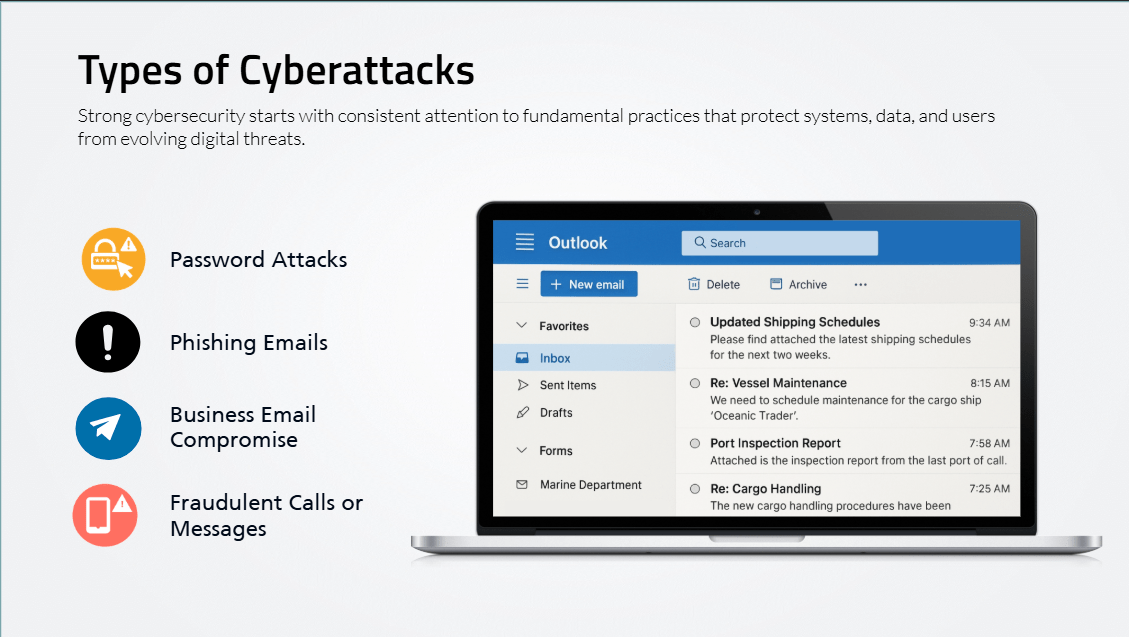
Beyond how companies communicate during a crisis, there is a separate and growing vulnerability that receives far less attention: the digital behaviours of crew and staff. A crew member posting images or updates that inadvertently reveal the vessel’s position, route, or cargo, a team member that cannot recognise a phishing attempt, or a workforce that has had no guidance on what a cyber threat actually looks like. These are risks that do not announce themselves but can prove just as damaging when they materialise.
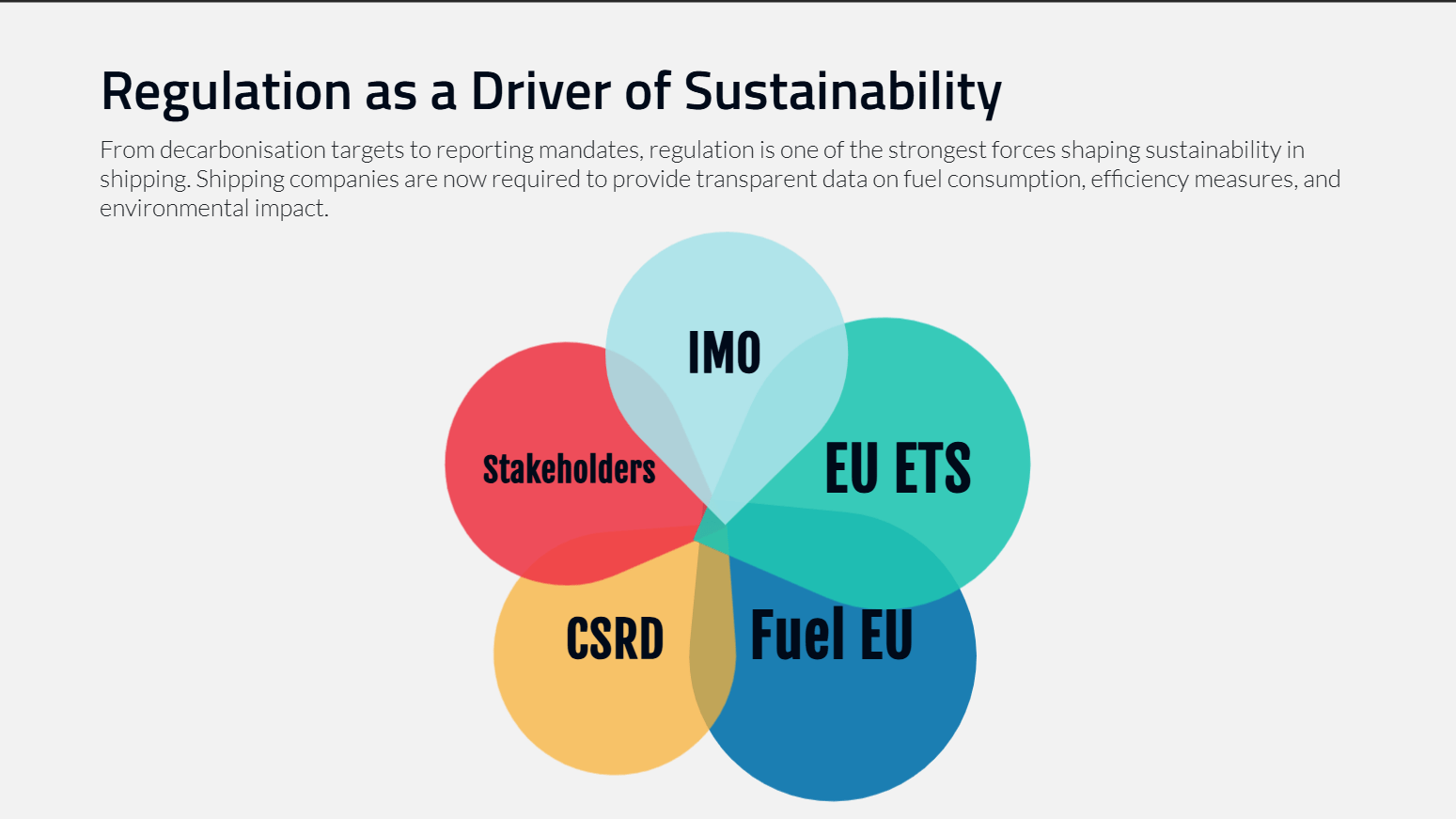
The backdrop to this is an industry increasingly focused on addressing its environmental impact and reducing harm through various regulations, frameworks, and reporting requirements. The EU Emissions Trading System (ETS) and FuelEU Maritime frameworks are prominent examples, both applying to vessels of 5,000 gross tonnes and above calling at European ports.
Together, they form a dual structure: one pricing carbon output, and the other targeting Greenhouse has intensity of fuel used onboard. Beyond Europe, the IMO’s revised GHG strategy has set its own targets, and pressure from financial institutions and charterers is adding a commercial dimension to what was once a purely regulatory conversation. The result is that shipping companies are now expected to address sustainability with the same rigour and precision they apply to any other area of their operations. The ability to report accurately, communicate progress credibly, and demonstrate genuine accountability has become a competitive and reputational issue in its own right.
MTI’s courses were designed specifically to address these realities with insight drawn from years of first-hand experience managing maritime crises on the world stage.
The Courses
Maritime Sustainability
This course offers a clear and accessible introduction to what sustainability means in a maritime context and why it matters. Learners explore the key forces shaping responsible operations today, from environmental impact and social responsibility to governance standards and the balance between people, planet, and economic wellbeing. Developed by industry experts at MTI, it equips maritime professionals with the knowledge to understand the evolving expectations, challenges, and opportunities defining the future of the industry.
Seafarer Media Course
This interactive course is designed to ensure shipboard staff understand how to handle media attention, whether by telephone or in person, particularly in the aftermath of an incident. Content is delivered through realistic scenarios, instructional videos, audio-guided presentations, and multiple-choice questions, giving seafarers practical techniques to respond effectively under pressure.
Shoreside Media Course
Designed for office-based staff, this course guides learners through the challenges of dealing with the media from a shoreside perspective. Structured across six sections, it covers the full range of situations that non-spokesperson employees may encounter: understanding the media landscape, responding to press enquiries, communicating with families, handling a media ambush, navigating social media, and managing cybersecurity risks.
Social Media and Cybersecurity Awareness
Social media has become a vital channel for communication and connection across the maritime community, both at sea and onshore. But with that connectivity comes real risk. A single poorly considered post can unintentionally expose sensitive information and compromise operational security. This course teaches maritime professionals how to stay safe online, think critically about what they share, and protect both themselves and their organisation. Developed by MTI’s industry experts, it provides practical guidance on responsible social media use across the maritime sector, with a focus on safeguarding safety, security, and reputation.
Who should take these courses?
These courses are designed to be relevant across the maritime workforce:
- Seafarers will benefit most from the Seafarer Media and Social Media & Cybersecurity courses, which address situations they are likely to encounter directly.
- Shoreside teams, including operations, crewing, and communications staff, will find the Shoreside Media and Sustainability course particularly relevant to their roles.
- Fleet Managers and L&D professionals looking to build organisation resilience will find MTI’s suite a valuable complement to existing technical training programmes, helping to round out a crew’s competency beyond operational skills alone.
Explore the MTI Network Courses on OLP
The MTI Network courses are available now on the Ocean Learning Platform. Whether you are looking to strengthen your organisation’s crisis preparedness, support compliance with evolving sustainability expectations, or simply equip your people with skills that go beyond the technical, these courses offer a practical and credible starting point.
Log in to your Ocean Learning Platform account to explore and enrol in the MTI Network course suite.